Magnetic closure or snap fastener: how to choose for adaptive clothing
Both close a garment. Only one closes with one hand, without aiming. The five criteria we use in the engineering office to decide, and what to validate at the prototype stage.

In a hurry? Let an AI summarise this article.
Pick your assistant: the prompt is already written.



Adaptive clothing is judged on a gesture: closing a jacket, opening a pocket, adjusting trousers, with one hand, without looking, sometimes with fingers that no longer grip the way they used to. The closure is where that gesture succeeds or fails. Snap fasteners and magnetic closures serve the same function, but not the same gesture. That is what should decide.
What the gesture demands
A snap fastener requires aligning two parts precisely, then pressing. You have to aim, hold both panels, and apply firm pressure. For someone with the use of one hand or reduced grip, each of these three steps is an obstacle in itself.
A magnetic closure reverses the logic: the two panels attract each other and settle into place as soon as they come close. There is no aiming, only approaching. Opening is done by pulling apart, with no anchor point needed. The gesture becomes a tolerated approximation, and that is exactly what adaptive clothing must tolerate.
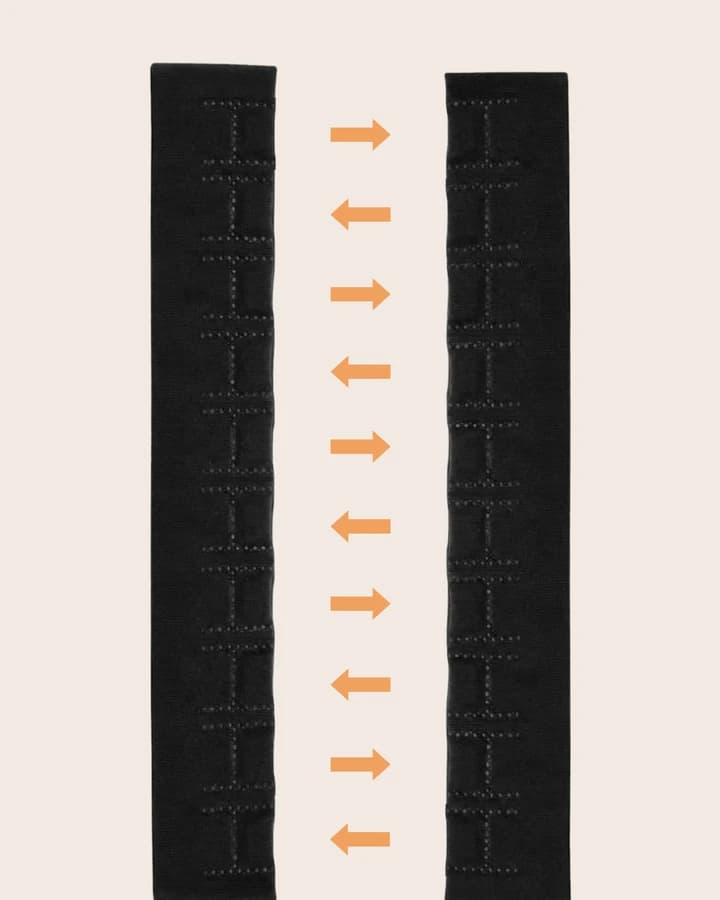
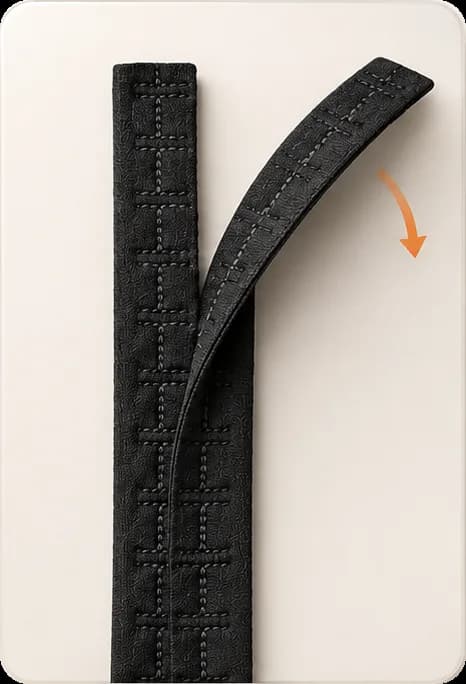
« A snap fastener asks you to aim. A magnetic closure asks you to come close. For a hand that no longer grips, that is the whole difference. »
The criteria that decide
In our engineering office we compare the two options on five criteria, in this order:
- The opening and closing gesture: one hand, two hands, with or without aiming.
- Alignment: does the closure position itself, or does the wearer position it?
- Discretion: what is seen and what is felt through the fabric, on the outside as well as against the skin.
- Integration in garment making: what the sewing station must change to accommodate it.
- Care: the washing and drying conditions planned for the finished product.
On the first two criteria, the magnetic closure wins by construction. On the other three, the answer depends on the chosen format and on the prototype. That is where the work begins.
Where a magnetic closure fits
The locations that come up most often in adaptive clothing projects:
- The front opening of a jacket, waistcoat or shirt, replacing a row of buttons.
- Pocket flaps, for one-handed access without looking.
- Side openings on trousers, which make dressing while seated easier.
- Sleeve and leg slits, to pass an orthosis or a device without removing everything.
In each of these cases, the closure is sewn into the garment, with no visible hardware. From the outside, nothing distinguishes the adaptive garment from a standard one. That is often the point that wins over the person who will wear it.
How the format is decided
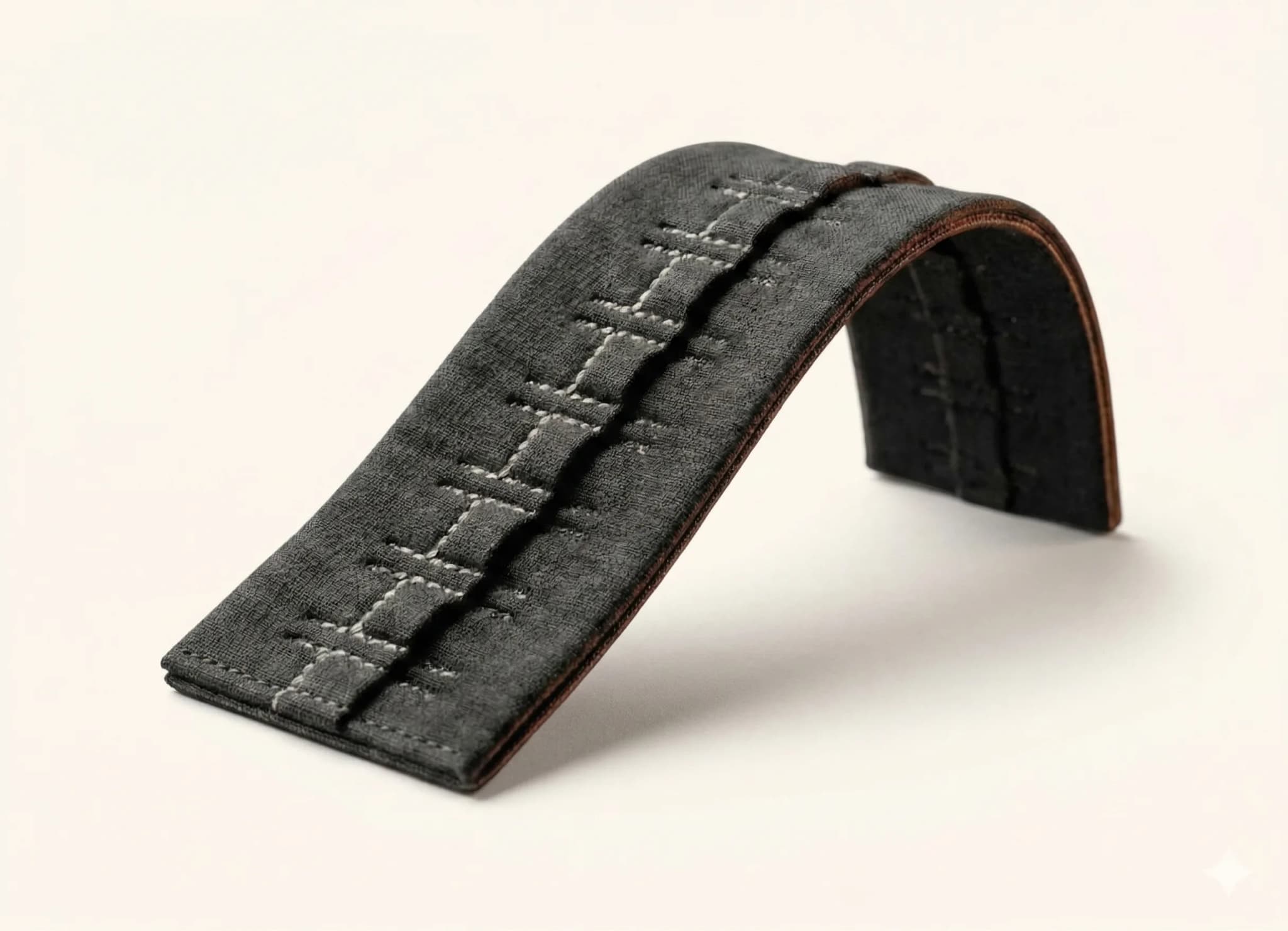
Our range of magnetic zips comes in two geometries. The ZIP C is lateral: the magnets sit on one side of the tape, for edges, flaps and off-centre openings. The ZIP G is centred: the magnets are aligned on the axis of the tape, for front openings.
Each geometry comes in ten magnet spacings, from 1.2 cm to 10 cm. The shorter the spacing, the more continuous the closure and the more tolerant it is of an imprecise gesture. The longer it is, the more supple and light the tape remains. An adaptive garment usually starts with a short spacing on the main opening, and a long spacing on secondary areas.
For a closure that has to follow a curve, or whose length varies from one size to the next, a cut-to-length magnetic strip replaces the zip: same principle, cut to the required length during making up.
What to validate at the prototype stage
An adaptive clothing prototype is validated with the person who will wear it, not on a table. Four points to check before going into production:
- The real gesture: closing and opening with one hand, seated, with the garment on.
- Hold in use: does the closure stay closed through everyday movements, without opening on its own?
- Comfort against the skin: no hard area should be felt on pressure points, especially when seated for long periods.
- Care: the washing cycles planned for the finished product, validated on the chosen reference.
Send us the piece or its pattern: we define the format, the spacing and the assembly before sending you a sample to sew. It is at this stage, and not afterwards, that the details are settled that make an adaptive garment actually get worn.